At AISM we are Raising Awareness this week for World Environment day which was June 5th and World Oceans day, June 8th. Keep following our blog to see how we are inspiring our learners this week!
We are excited to announce that AISM has launched its SUSTAINABILITY COMMITTEE!
The Committee consists of a group of students, teachers and administrative staff who have taken up the commitment of helping AISM become more sustainable by implementing practices in all areas that are more conducive to contributing towards a greener school and consequently contributing towards improving the impact we all have on the environment.
We launched the committee, in honour of Earth day on April 22nd, with a recycling initiative. We have formed a partnership with a local recycling company called Recolixo and rolled out the initiative by getting the learners involved as Agents of Change, placing recycling and non-recycling stickers on all bins on campus and produced a charming informational student video with guidance on what goes in the recycling and non-recycling bins.
The committee is also collaborating with the Secondary School Students Environmental Committee with their composting initiative on campus as well as with their Community Machamba project.
The AISM IT department has initiated a multi-function "follow me" printer initiative that will make AISM’s printing, cartridge and paper usage, more sustainable.
The committee has a plethora of different projects, ideas and events we intend on implementing as we head towards fulfilling our mission. So many fabulous changes!
This term we will continue the work initiated on AISM’s Environmental Policy and get parents involved with a “Wish List” initiative, so please stay tuned for future events likeWorld Environment Day (05 June) andWorld Oceans Day (08 June).
If we want to make a difference, we need all Buffalos to stand together to make that difference! Please do not hesitate to email us with questions, thoughts and ideas.
sustainability-committee@aism-moz.com
Important upcoming dates;
02 May - World Tuna day
12 May - International Day of Plant Health
20 May -World Bee Day
22 May -International Day for Biological Diversity
05 June - International day for the fight against illegal, unreported and unregulated fishing
05 June - World Environment day
08 June - World Oceans day
Sustainability Committee Mission Statement
The purpose of the Sustainability Committee is to guide AISM, as an institution, towards increased sustainable practices to achieve an environmental footprint of which we are proud.
· We strive to lead the way as a sustainable institution in Mozambique and Africa.
· We strive to model, involve and empower the community through events, patterns of behavior and systemic structures in order to shape sustainable thinking and being.
Every Wednesday, during PIE, the Grade 10 students gather in MP1 in order to touch base with teachers, and with each other, about their MYP Personal Projects. This is a time to collaborate, to get advice, to document progress and just to get on with their projects.
In this Buffalo Voices Podcast, on AISM Radio, seven of them chat with Sam Sherratt about what they're doing for their MYP Personal Projects and how it's going so far. Enjoy listening to Elisa, Hayden, Helen, Sydney, Tyra, Misa and Daniel talk about each of their very diverse projects!
Please feel free to watch the video or read the text, the content is identical.
Tomorrow, you will receive your child or children’s MAP Growth Student progress Reports. Before you do that, however, I’d like to share a number of very important messages with you.
Some facts about MAP Growth testing at our school this year
In the last few weeks, AISM faculty have been looking at the MAP Growth data in various forms, exploring what it might be showing us and what some of the implications might be for teaching and learning at AISM. The general levels of performance in many areas of the tests was very high and teachers have been extremely encouraged by what the data is showing them. When there is so much being said in the media in many countries about "lost learning" during the pandemic, we feel very proud of the learning that has continued to happen - either online or on campus - at AISM since the outbreak of COVID19… and very proud of our students.
The areas in which students have struggled, tend to be areas of the curriculum they have not learned yet, as we did our testing at the start of the year. Every year, the tests are based on the learning outcomes for that grade level and so, if students have not yet learned particular areas of the curriculum, that will come through in the data.
For the first time ever, the average scores for each test in every grade level are all higher than the US norms… in some cases, significantly higher. Of course, we understand that many students in the US have not had access to the ongoing quality education that AISM students have had during the pandemic, but this is still a very encouraging trend.
Many students have a RIT score that is slightly lower than the one they got in tests we did in March/April last academic year. This is not a cause for concern as the students are taking tests based on a whole new grade level’s learning outcomes and so are engaging with more challenging content. It’s also very common for students to perform a little lower at the start of the year after having a nice, long holiday!
This is going to be the first time that we will administer the MAP Growth tests two times in one academic year - once at the start of the year (click) and then the second time towards the end of the year (click). This means that we can finally start maximizing the potential of the test, which is actually designed to measure growth within an academic year. Until this year, because of the pandemic, we have only been doing the tests once every year and therefore only getting data from one year to the next.
Some thoughts with you about reactions to MAP Growth scores
Getting test scores can be a time of emotional extremes for families. If your child seems to have done incredibly well, for example, you might see it as a time to celebrate, but you may be disappointed if your child doesn’t do so well next time - which does happen. If your child seems to have done badly, you might become angry, maybe even angry with your child… and this won’t help them with their learning at all. Or, you may even look for someone else to blame - the school, or a teacher - and this damages relationships and, again, doesn’t help the student with their learning.
I urge you to avoid any extreme emotional reactions to your children’s test scores, no matter how they did. At AISM, we believe in the value of assessment for continuous learning and growth. These MAP results are just one part of that and we should all, of course, be curious about them, what they might be showing us, what they might not be showing us, how they might reveal areas the students need to work on and what they need help with, from all of us, in order to continue to grow as learners.
The data is showing us that some of the students do appear to have done way better in these tests than we were expecting them to, based on all of the other assessments we do with them. This could be because they:
are really familiar with, and good at, doing standardized tests like these
just had a really good day and outperformed themselves
The data is also showing us that some students have done worse than we were expecting them to, based on all of the other assessments we do with them. This could be because they:
are doing standardized tests like these for the very first time, like the whole of Grade 3 and many others new to the school and coming from schools where MAP is not done.
struggled with the complexity of the English in the tests if they are new or still fairly new to the English language.
just had a bad day - there might have been some conflict in their lives that day, they might have been very nervous, they might have lacked motivation, they might have been unwell, they might have felt anxious because of the pandemic.
could have had technical problems with their computer or with the internet that disrupted their experience of doing the tests.
The data is also showing us that some students have performed as we were expecting them to, based on all of the other assessments we do with them. This could be because they:
are comfortable and familiar enough with the test, or similar tests.
were feeling good that day.
had a smooth testing session and there were no technical difficulties.
Information about MAP and assessment in general
While their MAP scores are, of course, interesting, it is absolutely crucial that we all know that they do not represent the truth, the whole truth and nothing but the truth about how those students are doing in each of the subject areas. The purpose of these tests, like all good assessment, is to reveal useful information that can inform growth - it is not to judge, to rank, to compartmentalize the child or to form any permanent conclusions about them, how they learn or how they are taught.
The scores that we get from doing MAP tests are just one data point that is gathered along with many other pieces of data and information that are gathered about each child, what they’re learning and how they’re learning each academic year. This big picture of assessment is the full story of each student as a learner, and MAP scores are a small piece of that story. As we get into the regular routine of testing twice a year, as the students get more familiar with the testing, as our teaching and learning becomes more and more connected with the learning outcomes that were introduced two years ago and as the data from the MAP tests becomes more reliable, MAP scores will become a bigger part of the story. At present, though, they remain a small part.
So, tomorrow you will receive instructions about how to access and understand your child’s MAP Growth Student Progress Report. Many thanks for your time and attention to these important messages about MAP Growth testing at AISM.
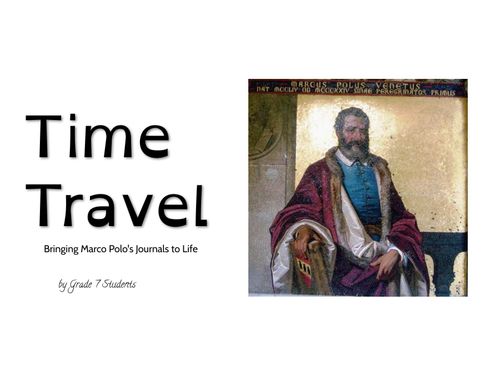
In Individuals & Societies, Grade 7 students are learning about exploration and the increasingly inter-connected world that resulted from these explorations. They did a case study of Marco Polo and used his journals to as a primary source of information about his experiences.
In this creative project, they traveled back in time and put themselves in Marcom Polo's shoes as he encountered some of the wild animals, advanced systems and the use of resources that were present in China in the 13th Century.
They used the costume room in the Auditorium in order to look as convincing as possible, the used the green screen and a digital camera to take the photos they needed for each situation, they found appropriate background images, they cropped the original photos using editing software and then layered the cropped images on top of the background image. Finally, they used Instapainting to convert the image into something that looks like a painting or drawing because, of course, cameras didn't exist in the 13th Century!
Here is their work in the form of a digital book! Please click the link to take a look.
Please feel free to watch the video or read the text - the content is exactly the same!
Hello!
I hope you’re all doing very well!
Just a quick update on the MAP growth tests scores. Teachers have started to look at the data from the tests and become familiar with it. Now that they have had the chance to do that, I have created each of your children’s individual reports and am uploading them into their Managebac portfolios. Putting them into Managebac makes them easy to access by parents, teachers or students so they can be referred to quickly and easily. You are able to download them as PDF documents from there.
I will get this done as quickly as I can and then send you a message to let you know they are ready and to give detailed instructions about how to access them as well as how to read them.
I should be able to have this ready by Wednesday next week. Many apologies for the further delay in getting this information out to you.
Feel free to watch the video or read the text - they are identical. You are also able to translate the page into many languages using the "Translate this page" option to the left of your screen.
I hope you’re all doing well and that you’re getting ready to have a good break - I know that the students and staff are definitely ready for some rest and I’m sure you are too!
Here’s a quick update on our MAP growth testing as it stands today.
Testing in Grades 3-5 is pretty much complete, with just a few tests to make up after the break if students missed them due to being absent or having technical difficulties. Testing in Grades 6 to 10 is taking a little longer and about 15% of the tests still need to be completed when we get back from the break.
Once all the tests are complete, we will start generating the whole school data so that staff can start looking into the patterns and trends that are revealed. Once they have had a chance to engage with the data, we will generate the individual student reports and start to share with families through Managebac. You can expect to receive your child’s MAP report in the first week of November, along with detailed instructions about how to read and understand the information.
I hope you all have a well-deserved rest as we all continue to navigate this strange and uncertain time in our lives.